
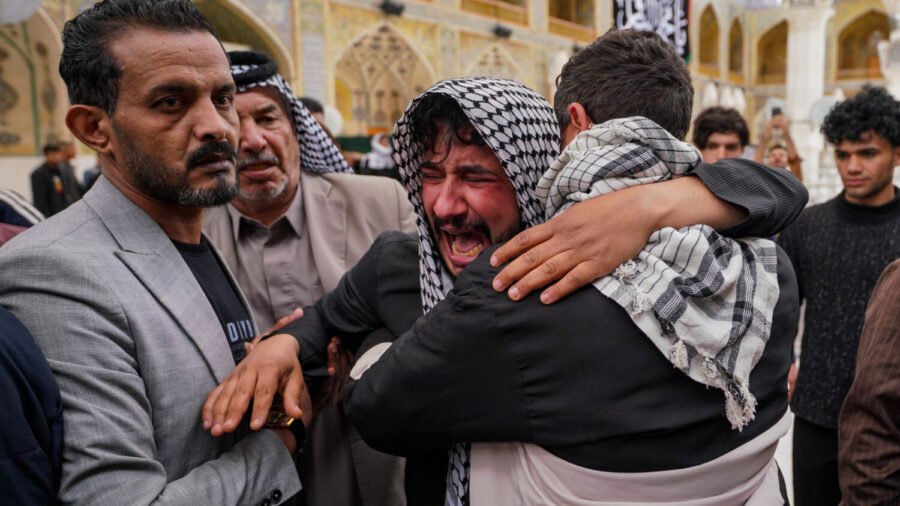
US and Israel Attack Iran
Conflict across the Middle East continues to escalate after the United States and Israel launched extensive military strikes on Iran, killing the country’s Supreme Leader, Ayatollah Ali Khamenei, on 28 February 2026.
In retaliation, Iran has carried out attacks on Israel and U.S.-allied states in the Gulf, spreading the fighting beyond its borders to Lebanon. Casualties and destruction are mounting on all sides.
When the U.S. and Israel first attacked, they targeted Iran’s missile infrastructure, military sites, and leadership in Tehran and across the country. The strikes killed Supreme Leader Khamenei, who had ruled Iran since 1989, along with dozens of senior figures in the Islamic Revolutionary Guard Corps (IRGC).
Other high-ranking officials killed include security chief Ali Larijani, intelligence minister Esmail Khatib, and Gholamreza Soleimani, head of the paramilitary Basij force. Following Khamenei’s death, his son, Mojtaba Khamenei, was named as the country’s new Supreme Leader on 8 March.
The U.S. and Israel also targeted sites linked to Iran’s nuclear program, which Iran maintains is entirely peaceful, as well as key oil and gas facilities vital to the Iranian economy.
Notable targets include Kharg Island, home to a major oil terminal, and South Pars, part of the world’s largest natural gas field. These strikes are believed to have significantly disrupted Iran’s energy infrastructure.
The human cost of the war has been severe. According to the U.S.-based group Human Rights Activists in Iran (HRANA), at least 3,486 people have been killed in Iran since the conflict began, including 1,568 civilians, of whom 236 were children.
Iran has accused U.S. forces of striking a girls’ school near an IRGC base in southern Iran on 28 February, claiming 168 people were killed, including approximately 110 children. The U.S. has said it is investigating the incident, while Israel stated it was “not aware” of any military operations in the area. BBC Verify reported that expert video analysis shows a U.S. Tomahawk missile hit a military base near the school.
The war has not been confined to Iranian territory. On 4 March, a U.S. submarine sank an Iranian warship in the Indian Ocean near Sri Lanka, killing at least 87 personnel.
Access to Iran for international journalists remains extremely limited, and internet connectivity has been almost entirely restricted, making independent verification of events difficult.
The conflict between the U.S., Israel, and Iran shows no signs of abating. With leadership changes in Tehran, ongoing missile and drone attacks, and strikes on critical infrastructure, the war has the potential to escalate further in the Middle East, affecting neighboring countries and global energy markets.
Analysts warn that the duration and intensity of the war will depend on both military strategy and diplomatic interventions, but given the scale of the initial strikes and Iran’s retaliatory capabilities, it could continue for months or even years without a negotiated settlement.