









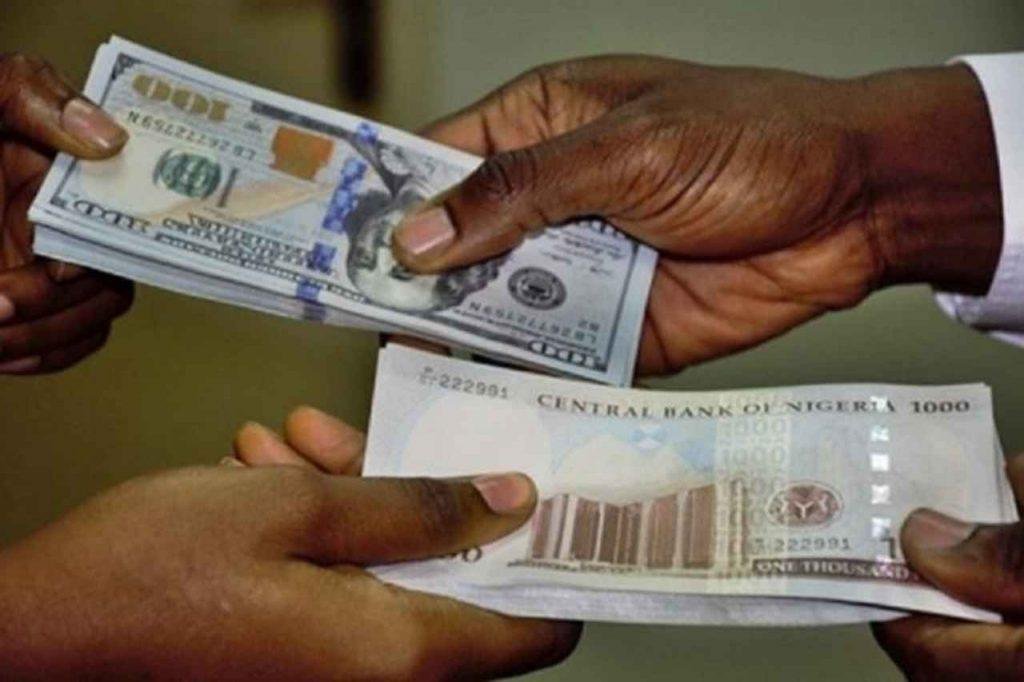
The naira traded with modest movements on Tuesday, November 10, 2026, holding a narrow range at the official window while the parallel market continued to quote significantly higher, keeping the gap between the two foreign exchange channels at as much as ₦83 per dollar.
At the Nigerian Foreign Exchange Market (NFEM), the dollar exchanged at an average rate of ₦1,346.51, with early trading confined to a band of ₦1,343.35 to ₦1,347.32. The official rate showed little deviation from Monday’s CBN data, which put the dollar at ₦1,349.34, compared with ₦1,346.79 at the close of the previous week.
The parallel market, however, told a different story. Bureau de Change operators quoted the dollar at ₦1,410 for buying and ₦1,430 for selling, depending on location and dealer. That spread places the informal market premium over the official rate at roughly ₦64 to ₦83 per dollar, or between 4.8 and 6.2 percent.
The persistent divergence reflects continued spot demand from small-scale importers and individuals seeking prompt access to foreign currency outside the banking system. Analysts also point to a moderation in market activity and a pause in the growth of Nigeria’s external reserves. Total FX turnover declined by 9.70 percent to $210.38 million on Monday from $232.98 million on Friday, while the number of deals fell by 21.09 percent to 116. External reserves slipped 0.36 percent to $55.06 billion as of November 6, easing after recently crossing the $55 billion mark for the first time since December 2008.
Despite the near-term pressure, the reserves remain 27.10 percent higher year-on-year, providing the CBN with a substantial buffer to manage the market. For businesses, the practical cost of the parallel-market premium remains material: purchasing $10,000 at ₦1,430 rather than ₦1,390 requires an additional ₦400,000, a difference that feeds directly into import costs and consumer prices.
With the official rate anchored near ₦1,346 and parallel-market quotes holding above ₦1,400, the near-term outlook points to a continued two-tier pricing structure—one that keeps pressure on importers and retail FX users even as the CBN insists the official market remains stable.